
High-Precision Injection Molding Solutions for the Automotive Industry
Did you know that injection molding can produce a single automotive part in under 60 seconds? This process forces molten thermoplastic into precise steel molds to create everything from lightweight dashboards to durable engine covers. The key benefit is that parts emerge with incredible consistency and require no further assembly, directly reducing vehicle weight. For automotive applications, you simply design the mold to exact specifications, then let the machine cycle produce thousands of identical components with unmatched repeatability.
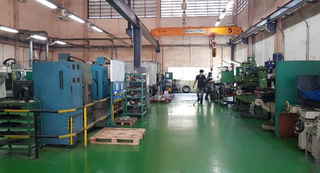
Precision Parts Manufacturing for Modern Vehicles
In the heart of a modern assembly line, precision parts manufacturing for vehicles relies on injection molding for the automotive industry to deliver engine components that withstand relentless heat cycles. A technician swaps a mold insert mid-run to achieve sub-micron tolerances on a fuel rail, ensuring zero-leak performance. Each shot of molten polymer is timed to account for material shrinkage, forming a gear housing that meshes perfectly with metal counterparts. The mold cooling channels are laser-sintered into conformal shapes, reducing cycle time while preventing warpage in complex geometries. This process transforms raw resin into a dashboard bracket that clips into place with audible precision, supporting sensors and airbag modules without flex or failure.
High-Volume Production of Interior Components
High-volume production of interior components relies on precision injection molding to achieve flawless fit and finish across thousands of units. The process centers on multi-cavity tooling, which simultaneously forms multiple parts per cycle to maximize output without compromising dimensional stability. A clear sequence governs production: first, engineering-grade thermoplastics like ABS or PC/ABS are dried to remove moisture; second, high-pressure injection at controlled temperatures fills the cavities; third, rapid cooling locks in tight tolerances for mating surfaces; fourth, robotic extraction removes parts for immediate quality inspection. This systematic approach ensures consistent grain textures, zero warpage, and snap-fit accuracy for dashboards, door panels, and consoles—critical for automotive assembly line efficiency.
- Pre-dry resin to 0.02% moisture content to prevent surface defects
- Inject melt at 200–280°C into water-cooled steel molds
- Eject parts using servo-driven robots for cycle times under 30 seconds
Durable Exterior Trim and Body Panels
Injection molding produces durable exterior trim and body panels that withstand harsh UV exposure and road debris without cracking or fading. By using advanced polymer blends like ASA and PC/ABS, these parts achieve high impact resistance while maintaining a flawless Class A surface finish. The process ensures precise fitment for fenders, rocker panels, and grille surrounds, eliminating warpage over extreme temperature swings. High-performance exterior trim benefits from reinforced glass-fiber fillers that reduce thermal expansion, keeping body panels aligned. Production follows a clear sequence:
- Melted material is injected into a chrome-plated steel mold under high pressure.
- The part cools while internal core pins create clip-attachment points.
- Ejector pins release the panel for trimming and surface inspection.
This method delivers scratch-resistant, chemically stable panels that resist stone chips and road salt corrosion.
Complex Under-the-Hood Components
Modern injection molding produces complex under-the-hood components that withstand extreme heat, pressure, and chemical exposure within tight engine bays. These parts, such as intake manifolds, oil pans, and turbo ducts, require precise material selection, often using glass-filled nylon or PPS. The process involves designing intricate core-cavity geometries for cooling channels and thin-wall sections. A typical production sequence includes:
- Molding the part with controlled flow to prevent voids.
- Post-mold annealing to relieve internal stresses.
- Laser welding for leak-proof assembly of multi-material modules.
This ensures dimensional stability and long-term reliability under continuous cyclic loads.
Advanced Material Selection for Automotive Applications
Advanced material selection for injection molding in automotive applications prioritizes high-performance thermoplastics that balance weight reduction, mechanical strength, and thermal resistance. Long-fiber-reinforced polypropylene and polyamide grades are commonly chosen for structural components like front-end modules and battery trays due to their rigidity and impact performance. For under-hood parts, engineers specify high-heat polymers such as polyphenylene sulfide or polyether ether ketone to withstand continuous exposure to oils and temperatures exceeding 150°C. Material selection also focuses on optimizing flow characteristics for thin-wall molding of complex geometries, such as air intake manifolds, to reduce cycle times and warpage.
A key insight is that selecting a tailored thermoplastic compound—rather than a standard grade—can eliminate the need for secondary operations like painting or welding by achieving required surface finish and dimensional stability directly from the mold.
This precision reduces assembly complexity and part count in final automotive assemblies.
Lightweight Polymers for Fuel Efficiency
For injection-molded automotive components, selecting lightweight polymers for fuel efficiency directly reduces vehicle mass, lowering inertial loads during acceleration and braking. Polypropylene and polyamide composites, when reinforced with glass or carbon fibers, provide stiffness rivaling metal while cutting weight by up to 50%. This substitution in intake manifolds, engine covers, and structural brackets minimizes fuel consumption without compromising crashworthiness. Wall thickness optimization via gas-assist injection further sheds mass by eliminating solid sections. The resultant weight savings improve powertrain efficiency by reducing rolling resistance and energy required for motion, making lightweight polymers a critical enabler of fuel economy targets in mass-produced vehicles.
Lightweight polymers achieve fuel efficiency by replacing heavier metals in injection-molded parts, directly lowering vehicle weight and energy demand.
High-Strength Engineering Plastics for Safety Parts
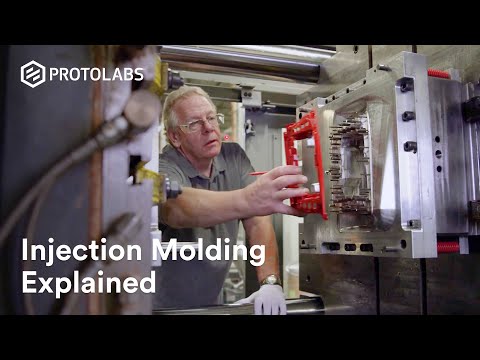
When molding safety parts like seatbelt components or airbag housings, you rely on high-strength engineering plastics for safety parts to absorb impact without cracking. These materials, such as glass-filled nylon or PEEK, demand precise injection parameters. First, pre-dry the resin to prevent hydrolysis. Then, use high mold temperatures (80–120°C) to ensure crystallinity for toughness. Finally, pack the cavity slowly to avoid knit lines that weaken the part. This sequence keeps your door latches, pedal brackets, and steering column parts durable under crash loads.
Thermoplastic Elastomers for Seals and Gaskets
For automotive seals and gaskets, thermoplastic elastomer sealing performance directly replaces traditional rubber through injection molding, enabling complex geometries like integrated bellows and multi-lip profiles without post-curing. TPEs offer superior compression set resistance in oil and weather exposure, while reducing cycle times by up to 40% compared to thermoset molding. Material selection focuses on shore hardness 50A–80A for door seals or 70A–95A for under-hood gaskets, with recyclable scrap from runners and rejected parts. Overmolding onto rigid polypropylene or nylon substrates eliminates secondary assembly, creating bonded seals that withstand 150°C continuous heat and vibration fatigue. No plastisol or silicone deterioration occurs, ensuring consistent leak prevention across 100,000+ mile lifespans.
Design Optimization for Automotive Tooling
In a Michigan plant, the tooling engineer optimizes the gate location on a bumper mold to eliminate a persistent knit line. By shifting the hot drop and running short-shot simulations, they ensure melt front uniformity.
This iterative adjustment directly shrinks cycle time from 65 to 52 seconds, reducing per-part cost without sacrificing Class A surface finish.
The steel’s conformal cooling channels are then refined via additive-manufactured inserts, cutting thermal variance across the cavity. For the glove-box door, the team integrates lifters with hardened inserts to combat wear from glass-filled nylon. Each change balances part geometry with mold durability, ensuring millions of flawless cycles in high-pressure production.
Mold Flow Simulation for Defect-Free Production
Mold flow simulation identifies potential defect zones by modeling polymer flow, thermal gradients, and pressure distribution within the tool cavity. This predictive analysis allows engineers to adjust gate locations and cooling channels before steel is cut, eliminating weld lines and sink marks in high-stress automotive components. By iterating fill patterns virtually, the process ensures uniform shrinkage and reduces warpage in large, thin-wall parts like bumpers or dashboards. Predictive defect elimination through simulation directly shortens tooling tryout cycles and improves first-shot yield. Q: How does simulation prevent gas traps in complex geometries? It predicts air entrapment zones, enabling strategic venting placement during tool design to avoid burn marks.
Multi-Cavity Molds for Cost-Effective Runs
For high-volume automotive parts like clips, connectors, or trim fasteners, multi-cavity molds for cost-effective runs drastically lower per-part price by producing several identical components in a single cycle. You balance cavity count with consistent fill and cooling to avoid warpage or short shots. This setup slashes cycle time per piece and maximizes machine uptime.
- Design balanced runner systems to ensure each cavity fills uniformly.
- Use modular cavity inserts for easy repair or replacement without scrapping the whole tool.
- Fine-tune cooling channels across all cavities to reduce cycle time evenly.
Hot Runner Systems to Reduce Cycle Times
Hot runner systems directly minimize cycle times in automotive tooling by eliminating the cooling phase required for solidified sprue and runner removal. Internally heated manifolds keep the melt at processing temperature within the mold, allowing only the cavity to cool. This reduces the thermal mass that must be cycled between injection and ejection. For high-volume components like interior trim or underhood connectors, a balanced thermal gate design ensures uniform melt delivery, preventing premature freeze-off that would extend fill time. The result is faster part ejection without waiting for secondary solidification. Valve-gated hot runner sequencing further optimizes cycle length by controlling cavity packing without slowing the overall press stroke.
Hot runner systems reduce automotive cycle times by eliminating runner cooldown, enabling near-instantaneous melt delivery for faster part ejection without waiting for secondary solidification.
Quality Control Standards in Vehicle Part Molding
In the high-stakes world of injection molding for automotive industry, quality control standards in vehicle part molding begin with the first shot. A mold technician watches a steering wheel skeleton cool, then places it under a coordinate measuring machine. The part must align within a tolerance of 0.02 mm—any deviation means scrapping the entire batch. Down the line, a process validation check confirms the melt flow index matches the spec sheet for that specific PP-LGF40 material. A pressure sensor in the cavity detects a 5% spike; the operator immediately adjusts the hold time, preventing sink marks on a dashboard bracket. This real-time feedback loop ensures every component meets the dimensional and material integrity standards demanded by the assembly line.
Tolerances and Dimensional Verification
In automotive injection molding, tolerances dictate the permissible deviation for critical dimensions like mating surfaces and locating features. Dimensional verification against these specifications typically employs coordinate measuring machines (CMMs) or optical scanners, focusing on critical-to-function (CTF) points. A defect found during verification often triggers an immediate tooling adjustment to bring subsequent parts back within the defined tolerance window. Dimensional stability under operational heat is a primary verification checkpoint, as minor warpage can compromise assembly.
How is a tight tolerance maintained across thousands of parts? By systematically verifying dimensions from the first article and after any process parameter change, using statistical process control (SPC) data from the CMM to detect tool wear before parts violate the limit.
Surface Finish Requirements for Visible Parts
For visible automotive parts like interior trim or exterior body panels, surface finish requirements are governed by specific texture standards, often defined via SPI (Society of the Plastics Industry) finish grades (A-1 to D-3). These grades dictate mold polishing to eliminate flow lines, sink marks, or weld lines. Gloss levels must be tightly controlled—typically low-gloss (2-5%) for dashboards to reduce glare, while high-gloss (90%) is reserved for piano-black bezels. Mold surface texture (e.g., from laser etching or chemical etching) must replicate exactly on every production cycle to ensure consistent reflectivity and tactile feel. Any deviation beyond 0.2 µm Ra for critical surfaces results in rejection, as defects are immediately visible to the user. Steel quality and polishing sequence (diamond paste down to 1 µm) are non-negotiable for Class A surfaces.
Testing for Heat and Chemical Resistance
Testing for heat and chemical resistance in automotive injection molding subjects samples to elevated temperatures in forced-air ovens to assess dimensional stability and thermal degradation, per OEM specifications like those from Ford or BMW. Immersion tests in aggressive fluids—engine oil, brake fluid, coolant, and battery electrolyte—measure weight change and surface integrity over set durations. A comparison of key evaluations is below.
| Test Type | Parameter Measured | Common Standard |
|---|---|---|
| Heat Aging | Linear shrinkage, tensile retention | ASTM D3045 (150°C, 1000h) |
| Chemical Immersion | % weight change, hardness shift | SAE J1637 (72h at 23°C) |
Sustainability Trends in Plastic Component Production
Sustainability trends in plastic component production for automotive injection molding center on the practical integration of recycled content and material efficiency. Molders now routinely use post-consumer and post-industrial recycled resins, adjusting processing parameters to maintain part integrity for under-hood and interior applications. The shift toward bio-based polymers, such as PLA or PHA compounds, is viable for non-structural trim, reducing reliance on fossil fuels. Lightweighting through advanced material flow simulation and gas-assist molding cuts material use per part while preserving strength. Does switching to recycled material compromise part durability? Properly sourced and compounded recycled resins, combined with optimized molding cycles, match virgin material performance for specified automotive loads and thermal exposure. This approach directly reduces scrap and energy consumption per cycle.
Recycled Materials in Non-Structural Parts
For non-structural automotive parts like interior trim, ductwork, and under-hood covers, using recycled materials in injection molding requires consistent material sourcing for optimal flow. Post-consumer or post-industrial polypropylene and nylon must be screened for contaminants to prevent nozzle blockages. Processors adjust temperature profiles and screw speeds to accommodate variable melt flow indices, ensuring complete fill without weld lines. Gating and wall thickness are designed to handle reduced impact strength. Regrind content is typically capped at 30% for thin-wall parts to avoid brittleness, while thicker components can accept higher ratios if testing validates cycle times and surface finish.
Recycled materials in non-structural automotive injection molding demand careful process adjustments and material screening to maintain flow, fill, and impact performance without compromising part quality.
Bio-Based Polymers for Eco-Friendly Interiors
Bio-based polymers for eco-friendly interiors now offer viable drop-in replacements for petroleum-based resins in injection molding. These materials, derived from sources like corn starch or sugarcane, achieve comparable surface finish and durability for dashboards and door panels. Bio-based polypropylene compounds reduce carbon footprint by up to 60% without altering standard processing parameters. However, their moisture absorption rate demands precise drying protocols to prevent splay defects during molding. For optimal adhesion in multi-material assemblies, the polymer’s lower surface energy requires specialty primers. A key consideration is the trade-off between biobased content and impact resistance at sub-zero temperatures:
| Property | Conventional PP | Bio-Based PP (40% content) |
|---|---|---|
| Melt Flow Index (g/10min) | 20–30 | 18–28 |
| Notched Izod Impact (J/m) at -20°C | 45–55 | 35–45 |
| Shrinkage (%) | 1.5–2.0 | 1.6–2.2 |
Energy-Efficient Manufacturing Processes
In automotive injection molding, energy-efficient manufacturing processes directly cut operational costs by optimizing machine hydraulics and integrating servo-driven pumps. These systems recover braking energy and adjust power draw per cycle, reducing consumption by up to 70% compared to traditional setups. To maximize savings, implement a clear sequence:
- Audit cycle times to identify idle energy waste.
- Replace standard heaters with insulated, high-efficiency bands.
- Use real-time monitoring to trim peak demand during cooling phases.
This approach lowers per-part production cost without compromising cycle repeatability or part integrity.
Integration with Electric and Autonomous Vehicles
For electric vehicles, injection molding must adapt to housing larger, heavier battery packs, requiring high-flow materials and steel alloys to maintain dimensional stability in thin-wall, large-format enclosures. Autonomous vehicles demand sensor brackets and LiDAR mounts with zero optical distortion and thermal expansion matching, achievable through glass-filled polymers and precision mold temperature control. Integrating metal insert overmolding is essential for electrical connectors and heat sinks within the battery management system. Predictive simulation of fiber orientation in composite pellets is critical to prevent warpage in structural battery trays. Designing for modular tooling that can switch between EV and ICE component families without full retooling is often overlooked.
Battery Housing and Thermal Management Parts
For electric vehicle integration, injection molding produces battery housing and thermal management parts that ensure safety and efficiency. The process first molds complex, lightweight enclosures from flame-retardant polymers to shield cells from impact and moisture. Next, it creates integrated cooling channels and manifolds within housings, managing heat dissipation during rapid charging. These molded components often combine structural support with dielectric properties, eliminating secondary assembly steps. The sequence involves:
- Overmolding rigid frames with soft seals for dust and water ingress protection.
- Insert-molding metallic heat sinks directly into plastic ducts for enhanced thermal transfer.
- Producing single-piece liquid-cooled plates that replace multiple metal parts.
This integrated approach reduces weight and simplifies thermal regulation in tight battery packs.
Lightweight Connectors for Electronic Systems
Injection molding enables the production of lightweight connectors for electronic systems by using high-performance thermoplastics like PBT and LCP, which replace heavier metals without sacrificing signal integrity or durability. These connectors withstand thermal cycling and vibration, ensuring reliable data transmission in autonomous vehicle sensor arrays. Precision molding of intricate pin geometries eliminates secondary assembly, reducing both weight and potential failure points. How do lightweight connectors improve overall vehicle efficiency? By reducing mass in the electronic architecture, they directly lower power consumption and extend battery range, a critical advantage for electric powertrains.
Sensor Mounts and Camera Housings
In electric and autonomous vehicles, precision sensor mounts and camera housings demand injection-molded components that guarantee unwavering alignment. These parts must withstand constant vibration while maintaining micron-level accuracy for lidar, radar, and optical systems. Polycarbonate blends with UV-stabilized additives are selected to prevent optical distortion from solar exposure. Integral cooling channels are molded directly into housings to manage heat from high-resolution sensors. Threaded metal inserts are overmolded for robust, repeatable mounting without creep. The result is a rigid, thermally stable enclosure that protects expensive electronics and ensures sensor fusion systems receive distortion-free data.
Challenges in High-Volume Automotive Molding
In high-volume automotive molding, maintaining stringent dimensional stability across millions of cycles is a primary challenge, as even micron-level drift can compromise component fitment in critical assemblies. The need to process advanced engineering resins with precise melt flow control under extreme shear rates creates a persistent risk of warpage or sink marks in complex geometries like air intake manifolds. Managing thermal management across the tool face is paramount to prevent localized hot spots that lead to inconsistent crystallization, especially in semi-crystalline polymers. A nuanced approach involves correlating cavity pressure signatures with real-time viscosity shifts to anticipate and compensate for material batch variations. Cycle time optimization must be balanced against part quality, as aggressive cooling for throughput often induces residual stress that later manifests as premature failure under hood. Robust mold design considering robust venting and uniform wall stock remains non-negotiable to avoid short shots and voids in multi-cavity family tools common in lighting and interior trim.
Managing Warp and Shrinkage in Large Parts
Managing warp and shrinkage in large automotive parts demands precise control of cooling uniformity and material flow. Uneven wall thicknesses in bumpers or dashboards exacerbate differential shrinkage, so designers must implement uniform cooling channels and utilize glass-filled polymers to enhance dimensional stability. Adjusting packing pressure and hold time directly counteracts volumetric contraction, while mold temperature regulation prevents warpage during ejection. Predictive simulation software identifies distortion risks before tooling is cut, allowing for iterative gate and rib design adjustments. Consistent material viscosity and annealing cycles further mitigate residual stresses that cause post-molding deformation.
Mastering warp and shrinkage requires synchronized cooling design, material selection, and process parameter optimization to produce dimensionally stable large parts at high volume.
Avoiding Flow Lines and Sink Marks
Avoiding flow lines and sink marks in high-volume automotive molding demands meticulous control over material temperature and injection speed. Rapid cooling near thin wall sections, like those in door panels, commonly creates these surface plastic injection molding automotive parts defects. You can mitigate them by optimizing gate placement for uniform cavity fill and strategically increasing pack pressure. This ensures sufficient material feeds into thicker ribs or bosses, preventing internal voids that cause sink marks. Maintaining consistent melt viscosity is critical; precise thermal management across the mold’s core and cavity eliminates hesitation lines, producing flawless Class A surfaces without costly secondary finishing.
Maintaining Consistency Across Production Batches
Maintaining consistency across production batches in high-volume automotive molding demands rigorous control over the injection process, particularly repeatable melt temperature and packing pressure profiles. Material supply must be stabilized, as viscosity shifts from recycled content or dryer fluctuations can throw part dimensions off spec. Even a 0.5% shrinkage variation between batches can cause warpage in large body panels, leading to costly scrap or rework. Mold temperature regulators and cycle-time monitoring systems must be locked to prevent drift, while periodic cavity-pressure sensors verify that each shot replicates the previous one. Without this discipline, assembly fits degrade, and paint adhesion or weld line strength becomes unpredictable.
Understanding the Core Process of Automotive Plastic Part Manufacturing
How Molten Polymer Becomes a Precision Vehicle Component
Key Machinery and Tooling Used in Automotive Molding
Common Thermoplastics Selected for Under-Hood and Interior Parts
Recent Comments