Vertical Transportation Systems Engineered for Unstoppable Vertical Mobility
Over 7 billion people ride elevators globally each day, making vertical transportation the world’s most utilized form of movement. Vertical transportation systems are engineered networks of elevators, escalators, and moving walks that efficiently move people and goods between different elevations within a structure. These systems use traction, hydraulic, or linear motor technology to balance speed, capacity, and energy consumption, optimizing building circulation. To use a system, passengers simply call a car via a control interface and select a destination, allowing the dispatching algorithm to minimize wait times and group traffic flow.
Modern Lift Technologies and Their Core Mechanics
Modern vertical transportation systems now rely on machine-room-less (MRL) traction technology, where a compact gearless motor mounts directly inside the hoistway, eliminating the penthouse and freeing building space. Beneath the car, the core mechanics involve a VVVF (variable voltage variable frequency) drive that precisely controls acceleration and deceleration, making each stop feel like the elevator is reading the building’s rhythm. Counterweights balance the cab’s load, reducing energy draw, while regenerative drives capture braking energy and feed it back into the building’s grid. Inside the shaft, electromagnetic sensors and microprocessors coordinate door sequencing and floor leveling, so the car aligns flush to the landing without jolting—a quiet, seamless dance of tensioned steel ropes and digital brains moving people through the building’s vertical spine.
How Traction Elevators Differ from Hydraulic Models
Traction elevators fundamentally differ from hydraulic models by using ropes or belts over a motor-driven sheave, with a counterweight offsetting the cab’s mass for superior energy efficiency. This eliminates the need for an underground piston and oil reservoir required by hydraulics. Consequently, traction systems achieve faster travel speeds and serve taller buildings without hydraulic fluid risks. In contrast, hydraulic elevators rely on a ram and pressurized fluid for movement, limiting them to low-rise applications.
- Traction elevators use counterweights for reduced energy consumption, while hydraulics consume power on both ascent and descent.
- Hydraulic models require a machine room and piston excavation; traction units can be machine-room-less.
- Traction systems deliver smoother, quieter rides due to gearless or machine-flexible drives compared to hydraulic vibrations.
The Role of Machine-Room-Less Designs in Space Efficiency
Machine-room-less (MRL) designs directly maximize usable floor area by eliminating the separate penthouse structure traditionally required for hoist machinery. This space efficiency allows architects to reclaim valuable rooftop or upper-floor square footage for tenant amenities or building systems. The compact drive unit, mounted directly within the hoistway, frees up structural load paths for alternative building layouts. Integration of the controller within the door frame further reduces mechanical footprint. This reallocation of vertical real estate makes MRL systems the optimal choice for space-constrained urban infill projects. Maximizing rentable square footage is the primary practical benefit.
Machine-room-less designs boost space efficiency by eliminating the machine room, granting architectural flexibility and increased usable area.
Key Components: Hoistways, Counterweights, and Controllers
The hoistway acts as a sealed shaft, guiding the cab and ensuring smooth travel while housing all vital rails and safeties. Counterweights balance the car’s weight and roughly half its load, reducing motor strain and energy use dramatically. Controllers act as the brain, managing acceleration, door timing, and floor-leveling precision. A well-tuned controller can reduce stop jolts to nearly imperceptible levels, making the ride feel seamless. Together, these core vertical transportation mechanics determine ride quality and efficiency.
- Hoistways include guide rails and buffers for stability and emergency stops.
- Counterweights move opposite the cab to cut motor power needs by up to 40%.
- Controllers process hall calls and optimize traffic flow through algorithms.
- Modern variable frequency drives in controllers adjust speed smoothly between floors.
Smart Escalators and Moving Walks
As commuters pour from a subway train, the smart escalator adjusts its speed to match footfall, slowing to a crawl when empty to conserve energy. In a towering airport, the moving walk accelerates passengers along a long corridor, its sensors detecting a wheelchair to reduce pace gently. Unlike static stairs, these vertical transportation systems integrate load-monitoring and predictive maintenance, automatically halting if a handrail is pulled too hard to prevent injury. At a packed stadium, an escalator clusters riders into uniform gaps, eliminating bottlenecks while its twin reverses direction for exiting crowds. These systems thus transform mere travel into a responsive, adaptive experience within the building’s circulatory network.
Energy-Saving Features Like Variable Speed Drives
Variable speed drives (VSDs) in smart escalators optimize energy consumption by modulating motor speed based on real-time passenger demand. When no users are present, the drive reduces the system’s velocity to a low standby idle, cutting power use by up to 60% compared to constant-speed operation. The drive then smoothly accelerates the walkway to full speed as passengers approach. This process follows a clear sequence: first, sensors detect zero traffic, triggering the VSD to decelerate; second, the motor holds at reduced revolutions per minute; third, upon detecting a passenger, the VSD ramps power output for seamless re-acceleration. This eliminates wasteful full-speed operation during low-traffic periods.
- Detect zero passenger flow via sensor feedback.
- Decelerate motor to standby idle using VSD frequency control.
- Re-accelerate to full speed when a passenger is present.

Safety Innovations: Comb Plates, Skirt Brushes, and Sensors
Specific safety innovations for escalators directly mitigate entrapment risks. Comb plates feature precisely aligned teeth that mesh with step treads, clearing debris and preventing shoe or clothing from being pulled into the gap. Skirt brushes create a physical and psychological barrier, discouraging foot contact with the stationary side panel and reducing friction-related hazards. Integrated sensors continuously monitor these critical zones; a jam or obstruction instantly triggers an emergency stop. Together, they form a proactive safety triad that addresses the most common entanglement points.
| Component | Primary Safety Function |
|---|---|
| Comb Plates | Clear debris and prevent insertion at step entry/exit |
| Skirt Brushes | Deter foot placement against the side panel |
| Integrated Sensors | Detect obstructions and halt movement immediately |
Structural Considerations for High-Traffic Public Spaces
For high-traffic public spaces, structural integrity dictates that truss reinforcement and load-bearing capacity must EKCNE exceed typical transit standards to handle continuous peak crowding. Grade beams must be designed to distribute dynamic loads from thousands of passengers per hour, preventing resonance or deflection at truss joints. Step chains and pallet tracks require hardened alloys to resist fatigue from constant, uneven weight distribution.
How does continuous peak loading affect escalator girder design? It forces the use of deeper, stiffer main chords and additional intermediate supports to eliminate sagging, which otherwise causes step misalignment and increased motor drag.
Specialized People Movers for Unique Settings
In the labyrinthine confines of a historic cliffside monastery, a bespoke funicular doesn’t just ferry monks upward—it glides on a single rail to preserve ancient stonework. These specialized people movers, like glass elevators that traverse an indoor rainforest’s canopy, must contort to tight radii while carrying fragile biospheres. A hospital’s pneumatic tube system for specimens is equally a vertical mover, shuttling urgent loads between labs where no passenger cab could fit. In a futuristic airport, a magnetic levitation shuttle tilts mid-shaft to connect terminals at a steep angle, its silent drift a counterpoint to the chaos below. A cable railway for a remote mountain clinic—whose cars can pivot while suspended—is less about speed than about knotting the vertical thread that binds remote lifelines together.
Dumbwaiters and Material Lifts in Hospitality and Healthcare
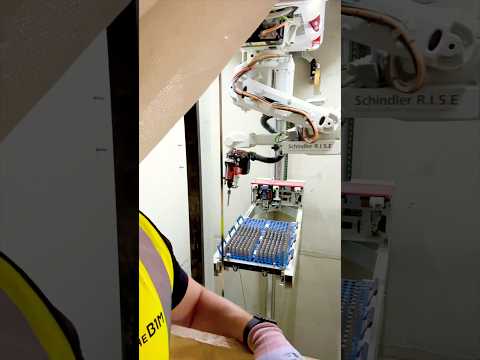
In hospitality and healthcare, dumbwaiters and material lifts serve as dedicated vertical transport for goods, not people. Hotels utilize them to discreetly shuttle room service trays, laundry, and linens between kitchens and guest floors, bypassing public elevators and corridors. Hospitals deploy larger material lifts for sterile supplies, pharmacy deliveries, and soiled linens, moving these loads directly to or from centralized storage and decontamination areas. A small dumbwaiter in a restaurant kitchen might handle only 200 kg of plated meals, while a healthcare lift can manage 500 kg of bulk medical carts. Both prioritize sealed, easy-clean interiors and automatic doors to maintain hygiene and streamline service without using passenger units.
Residential Platform Lifts for Accessibility
Residential platform lifts provide vertical mobility within private homes, serving as a practical solution for wheelchair users or individuals with limited stair climbing ability. These systems operate on a sturdy platform that travels along a fixed rail, eliminating the need for a traditional elevator shaft. Installation focuses on compact footprints to fit existing floor plans, often requiring a minimal pit or no pit at all. Key considerations include weight capacity to accommodate wheelchairs and an enclosed design for safety during transit. They function as a vertical transportation link between levels, bridging accessibility gaps without extensive structural modification.
- Can be installed indoors or outdoors with weather-resistant options.
- Operates at slow, controlled speeds for user confidence.
- Requires a dedicated power supply and emergency stop controls.
Vehicle Turntables and Parking Stackers in Urban Developments
In dense urban developments, vehicle turntables and parking stackers integrate directly into vertical transportation systems to resolve space constraints. A turntable allows a car to enter a narrow elevator cabin forwards and exit backwards, eliminating the need for a turning radius on precious floor plates. Stackers, operating like mechanical lifts, store multiple vehicles in a single footprint by raising cars vertically, often within a tower’s core. This eliminates sprawling ramps and maximizes leasable square footage. The result is a seamless, automated flow from street to parking slot, making high-density living feasible without sacrificing private vehicle access. Automated valet logic synchronizes stacker retrieval with elevator dispatch, minimizing wait times.
Q: Do vehicle turntables and parking stackers require extra structural reinforcement in high-rise buildings?
A: Yes, but their weight is concentrated within designated shaft zones, making integration with the tower’s core structure efficient—often lighter than equivalent ramp systems.
Integration with Building Management and IoT
For vertical transportation, Integration with Building Management allows elevators to communicate directly with fire alarm, access control, and HVAC systems. When an alarm triggers, the BMS can command all cars to a designated egress floor and disable non-essential stops. IoT sensors on motors, doors, and guide rails stream real-time vibration and temperature data, enabling predictive maintenance that schedules repairs during low-traffic periods. A key practical benefit is tenant smartphone integration, where an IoT gateway links the elevator API with a building app, allowing users to call a car from their phone and receive estimated arrival times. This reduces lobby wait times by consolidating passenger demand into intelligent groups. Power-over-Ethernet wiring for these sensors simplifies retrofits, avoiding expensive control-room rewiring.
Real-Time Monitoring for Predictive Maintenance
Real-time monitoring for predictive maintenance in elevators and escalators uses IoT sensors to track vibration, temperature, and door cycle counts constantly. This data flows into building management systems, automatically flagging anomalies like a bearing running hot before it fails. Scheduling repairs during off-peak hours becomes effortless when the system alerts you to slow degradation patterns. By catching issues early, you avoid sudden shutdowns and extend component life. Real-time IoT sensor data is the backbone of this approach, transforming maintenance from reactive to proactive.
- Detect motor overheating weeks before a breakdown occurs
- Track door mechanism wear via cycle counts and travel speed
- Receive automatic alerts for cable fraying or brake drift
Destination Dispatch Systems to Reduce Wait Times
Destination dispatch systems reduce wait times by grouping passengers with similar floor destinations into a single car, eliminating the traditional up/down button model. This algorithm minimizes stops per trip, cutting average journey time by up to 30% in high-traffic buildings. The system uses real-time passenger input to assign the most efficient car, dynamically adjusting to intelligent elevator grouping. It prevents car overcrowding by distributing requests evenly across the bank.
- Passengers enter their floor on a keypad or touchscreen before boarding, allowing the system to pre-calculate the optimal car assignment.
- By batching same-floor requests, the system reduces the number of intermediate stops a single car makes.
- It integrates with lobby kiosks or smartphone apps, enabling users to call an elevator before they reach the car entrance.
- Advanced algorithms re-route cars in real-time as new requests are added, avoiding inefficient backtracking.
Cybersecurity Protocols for Connected Lift Networks
In connected lift networks, end-to-end encryption must secure all telemetry and command traffic between the elevator controller, IoT sensors, and the building management system, preventing unauthorized remote manipulation. Network segmentation isolates lift systems from guest Wi-Fi and general building automation, creating a hardened gateway that filters anomalies. For operational integrity, multi-factor authentication is enforced for any technician accessing the lift’s remote diagnostic interface, ensuring only verified personnel can adjust speed settings or override door logic. Real-time intrusion detection monitors for traffic spikes or anomalous API calls, automatically locking down a lift car if a firmware integrity check fails.
Sustainability and Energy Performance

Sustainability and energy performance in vertical transportation systems are achieved through regenerative drives that capture and reuse braking energy from descending empty cars or counterweights, reducing total building power consumption by up to 25%. Modern traction elevators with machine-room-less designs eliminate wasteful hydraulic oil systems, while permanent magnet synchronous motors operate with near-silent, high-efficiency torque. Smart destination dispatch algorithms group passengers by floor requests, minimizing stops and idle travel time to cut energy waste per ride. LED cabin lighting coupled with standby sleep modes for fans and displays further lower parasitic loads. These integrated technologies ensure each movement consumes only the energy required, directly shrinking a building’s carbon footprint and operational costs without sacrificing performance or comfort.
Regenerative Drives That Return Power to the Grid
Regenerative drives that return power to the grid transform an elevator’s braking energy into reusable electricity, dramatically reducing a building’s net energy consumption. Unlike traditional systems that dissipate this energy as heat, these drives feed clean power back into the facility’s electrical network, offsetting usage from lighting or HVAC. This capability effectively turns the vertical transportation system into a micro-generator during descents or deceleration, lowering operational costs without mechanical complexity. For high-traffic buildings, the immediate payback from reduced utility draw makes retrofitting a straightforward sustainability upgrade, not a theoretical goal. Every cycle of a heavily used car directly contributes to the building’s energy performance.
Lighting, Standby Modes, and Low-Friction Materials
In vertical transportation, LED lighting with motion sensors drastically cuts energy use by illuminating cabs only when occupied. Standby modes reduce power to non-essential systems like fans or displays during idle periods, often achieving over 50% energy savings. Low-friction materials, such as ceramic-coated rails or polymer guide shoes, physically minimize mechanical resistance, directly lowering the motor load during every trip. The table below contrasts these three strategies.
| Strategy | Primary Benefit | User Impact |
|---|---|---|
| LED + Motion Sensors | Reduces lighting energy by 70-80% | No change in visibility or comfort |
| Standby Modes | Cuts standby power by 50-90% | Minimal delay waking from sleep |
| Low-Friction Materials | Lowers drive motor energy 10-20% | Smoother, quieter ride |
Lifecycle Analysis of Components and Retrofit Options
Lifecycle analysis of components in vertical transportation systems evaluates the environmental impact of each part—from raw material extraction to end-of-life disposal—guiding retrofit strategies for energy-optimized upgrades. By assessing wear patterns and embodied energy, decision-makers can prioritize component replacements like regenerative drives or LED cabin lighting that extend system longevity while reducing operational carbon. Retrofit options, such as modernizing traction sheaves or installing destination dispatch controls, are selected based on this analysis to balance performance gains against material waste.
- Motor and gearbox lifecycle assessments often recommend switching to permanent magnet synchronous machines for higher efficiency.
- Hydraulic elevator retrofits using biodegradable oil and energy-efficient power units reduce fluid disposal impacts.
- Cabin weight reduction via lightweight composites lowers long-term energy consumption in lifecycle modeling.
Regulatory Standards and Safety Frameworks
Regulatory standards like EN 81 or ASME A17.1 define the minimum performance criteria for elevator safety components, from door interlocks to brake systems. These frameworks mandate fail-safe mechanisms, such as overspeed governors and buffer systems, ensuring passenger protection during power loss or component failure. For users: *How do standards prevent car doors from opening between floors?* They require dual electromechanical interlocks that physically lock the door until the car is level and stationary, with self-monitoring circuits to detect any misalignment. Safety frameworks also dictate emergency communication, like two-way phones that must function during a blackout, directly linking passenger well-being to code compliance.
Global Codes: ASME A17.1, EN 81, and ISO 22559
Global codes for vertical transportation such as ASME A17.1, EN 81, and ISO 22559 define the minimum safety requirements for elevator design, installation, and operation. ASME A17.1 governs equipment in North America, specifying car dimensions, door interlocks, and emergency controls. EN 81, predominant in Europe, mandates machine-room-less layouts, seismic protections, and landing door strength. ISO 22559 provides a global baseline by aligning key safety parameters like braking distance and load capacity across jurisdictions. Compliance with these codes ensures uniform safety in car buffers, governor systems, and electrical safeties.
ASME A17.1, EN 81, and ISO 22559 form the statutory backbone for safe elevator components, installation protocols, and emergency operations worldwide.
Emergency Communication Requirements and Firefighter Operation
Emergency communication within vertical transportation systems must provide uninterrupted two-way audio between trapped passengers and rescuers, with audible and visual indicators confirming the connection. Firefighter operation requires dedicated elevator controls, including a key-switch to override normal automatic operation, enabling manual car movement and priority recall to a designated floor. The system must also disable fire-recall logic for certain phases of operation to allow safe suppression activities. Two-way emergency communication must remain functional during power loss via backup batteries, ensuring continuous contact until evacuation.
Emergency communication requirements mandate reliable two-way audio and visual status alerts, while firefighter operation relies on keyed manual override and priority recall, all backed by fail-safe power for uninterrupted functionality during incidents.
Inspection Frequencies and Third-Party Certification
Inspection frequencies and third-party certification govern the operational safety of vertical transportation systems. Elevators and escalators typically require mandated periodic inspections, often semi-annually or annually, depending on local codes and usage intensity. Third-party certification involves an independent qualified entity verifying that all safety-critical components, such as brakes and overspeed governors, meet specified performance benchmarks. While routine in-house checks are common, only a certified third-party assessment validates full compliance with the design safety framework.
- Standard building codes prescribe minimum intervals for third-party inspections, often every 6 or 12 months.
- Certification is obtained only after successful completion of load tests and safety device verification.
- Records from inspected units must be retained for audit, detailing pass/fail status and corrective actions.
Design Trends in High-Rise and Complex Structures
Contemporary high-rise design embraces destination dispatch as a standard, grouping passengers by floor to slash wait times and car crowding. Complex structures now integrate sky lobby transfers and double-deck elevators to maximize core efficiency. A nuanced trend is the adoption of machine-room-less traction elevators, which reclaim valuable rentable space while operating on regenerative drives. These systems often link via subterranean corridors to adjacent towers or transit hubs, creating seamless pedestrian flow. Interior design of cabs now prioritizes biophilic materials and dynamic lighting to counteract the sensory monotony of long express rides. The result is a vertical transit network that feels less like machinery and more like an intuitive extension of the building’s circulation.
Double-Deck and Twin-Lift Configurations for Skyscrapers
For moving huge crowds in supertalls, Double-Deck and Twin-Lift Configurations for Skyscrapers each solve different problems. Double-deck elevators stack two cabs in one shaft so you can load two floors at once, cutting stop frequency on busy express runs—perfect for splitting lower and upper lobby traffic. Twin-lift systems let two independent cabs share a single shaft, allowing one to pass the other while waiting, reducing wait times without extra shafts. In practice, double-decks boost throughput on sky lobbies, while twins offer flexible service during off-peak hours. Both shrink building core space, freeing up rentable floor area.
Rope-Free and Magnetic Levitation Prototypes
Rope-free and magnetic levitation prototypes eliminate physical cables, enabling cabins to move both vertically and horizontally within a single shaft. This allows for continuous, bidirectional traffic flow, drastically reducing wait times. Magnetic propulsion systems provide a smoother, quieter ride with near-silent operation compared to traditional traction lifts. By removing the need for a counterweight and thick ropes, these prototypes free up building core space for other uses. Multi-directional cabin routing becomes possible, letting cars bypass occupied shafts or service different floors on the same trip. A key practical differentiator lies in their core operation:
| Aspect | Rope-Free (e.g., Thyssenkrupp MULTI) | MagLev (e.g., Hitachi) |
|---|---|---|
| Propulsion | Linear motor in shaft | Electromagnetic levitation & guidance |
| Key Advantage | Multiple cabs per shaft | Zero friction; extreme heights |
| Noise Level | Low; motor hum | Virtually silent |
Acoustic and Visual Cabin Designs to Enhance Passenger Experience
Modern vertical transportation systems employ multi-sensory cabin environments to mitigate the psychological discomfort of high-rise transit. Acoustic design focuses on active noise cancellation that neutralizes low-frequency cable rumble, paired with surface materials that absorb high-frequency chatter without deadening the space. Visual elements utilize dynamic LED lighting that shifts chromatic temperature in sync with ascent, reducing claustrophobia through a gradual, expansive visual cue. Mirrors are angled to eliminate direct glare while creating perceived spatial depth. The aim is to cognitively separate the passenger from the physical mechanics of vertical displacement.
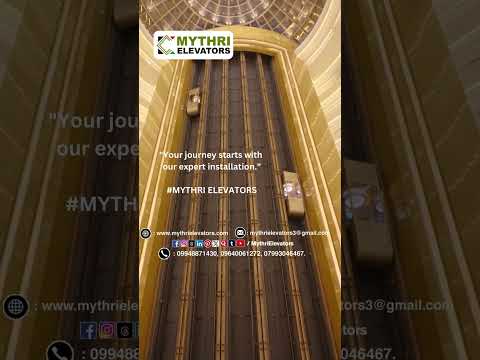
Q: How does visual design counteract motion sensitivity in a vertical cabin?
A: Strategically placed, low-reflectance surfaces (e.g., brushed metal or frosted glass) prevent disorienting motion parallax, while a steady horizontal light band at eye level provides a static visual anchor, reducing the brain’s confusion between perceived movement and actual acceleration.
Recent Comments